



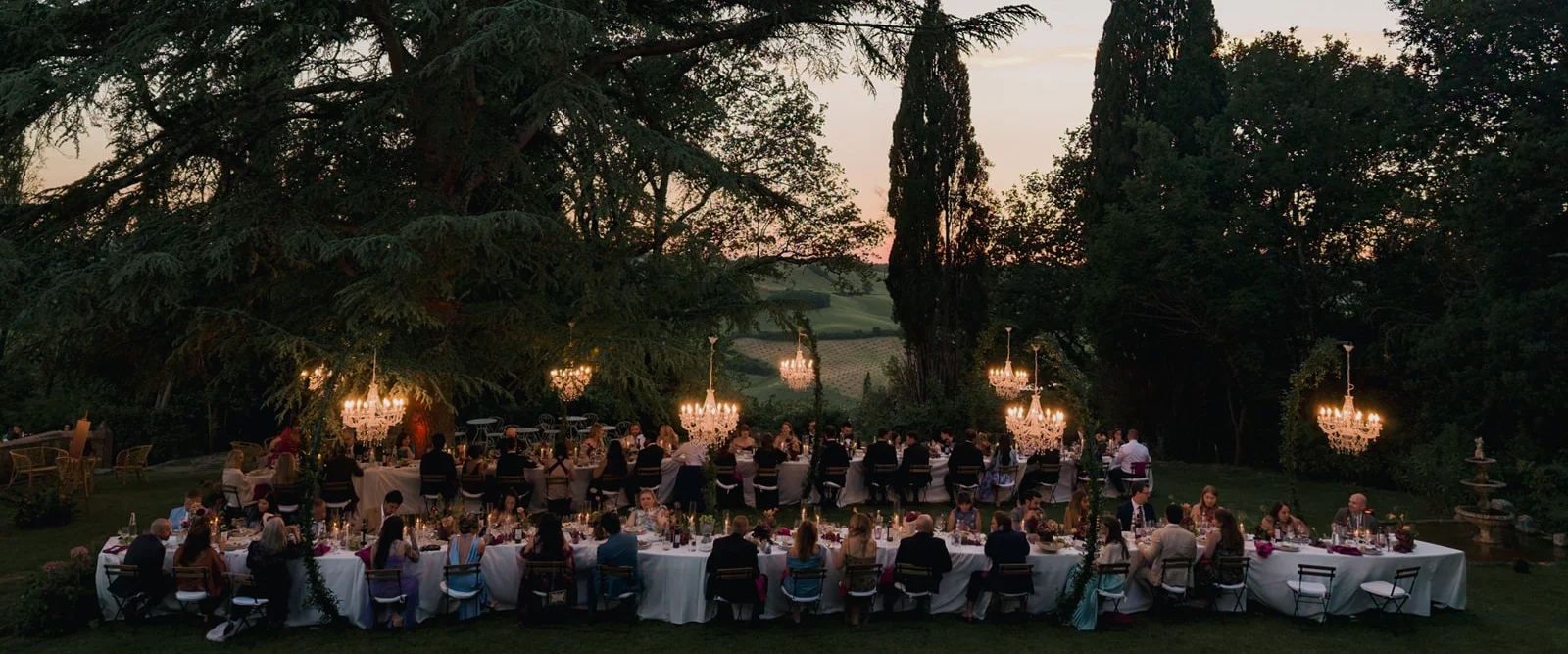
What a Wedding in Italy Really Costs: Six Decisions That Shape Your Budget
Updated November 2026. By Simona, founder of Happy Brides.
When couples first contact us, the first question is almost always the same: how much will this cost? It is the right question, and it deserves a better answer than “it depends.”
I have spent more than twenty years planning weddings in Italy, first in luxury hotels and for the last ten years with my own company, and I have seen more than 300 weddings take shape. The budget is rarely decided by one big choice. It is decided by a handful of early decisions that are easy to underestimate from abroad: how many guests will stay, how many events you host, what happens if it rains, and whether your date is fixed.
This guide walks through those decisions in the order we discuss them on a first call, so you can arrive at that conversation with a clear starting point.
How much does a wedding in Italy cost?
For a wedding weekend of three days with 80 to 120 guests, the couples we work with typically invest between €200,000 and €220,000, not including guest accommodation. Where you land depends on six decisions: your guest count, your date, the venue, accommodation, the number of events and the type of ceremony. Each one is explained below.
What should your budget include?
The first figure couples share with us often covers only the wedding day. A wedding in Italy for guests flying in from abroad is usually a full weekend, and the costs that surprise people most are the ones outside the wedding day itself.
| What to include | Why it is easy to miss |
|---|---|
| Welcome dinner and farewell brunch | Each one is a real event, with its own venue, catering, rentals and staff |
| Guest accommodation | Reserving an entire property for several nights changes the budget far more than a reception venue alone |
| Guest transportation | Transfers between hotels, ceremony and reception, often on narrow roads that require smaller vehicles |
| Rentals | Tables, chairs, linens, lighting and sound are not always part of a venue or catering quote |
| A plan for bad weather | A tent or a complete indoor setup, prepared in advance |
| Planning fee and VAT | Professional fees, and Italian VAT (IVA) on services |
Don’t be afraid to talk openly about money. Your budget is not a number you need to justify. It is the information that allows your planner to tell you early what is realistic, where your money is likely to go and which choices will make the biggest difference.
It also helps to name your two or three priorities before you look at a single venue. An exceptional dinner, having every guest stay together, a church ceremony, photography, several days with your guests: no wedding puts all of them first. Once your priorities are clear, every other decision becomes easier to make.
How does your guest count change the cost?
Your guest count decides more than the catering bill. It determines which venues can host you, how the day needs to run and what it takes to keep everyone comfortable.
Start with the venue’s capacity for the event you are planning, and then check its capacity for the version you hope never to need. A garden dinner sounds perfect until it rains. Is there an indoor space for every guest, with tables, music and service? Would you need a tent? At Borgo Stomennano, in Tuscany, rain once moved a dinner planned in the garden into the indoor hall. Guests sat down without delay, because an alternative seating plan for that room had been prepared in advance. That is what a good Plan B looks like: nobody notices it.
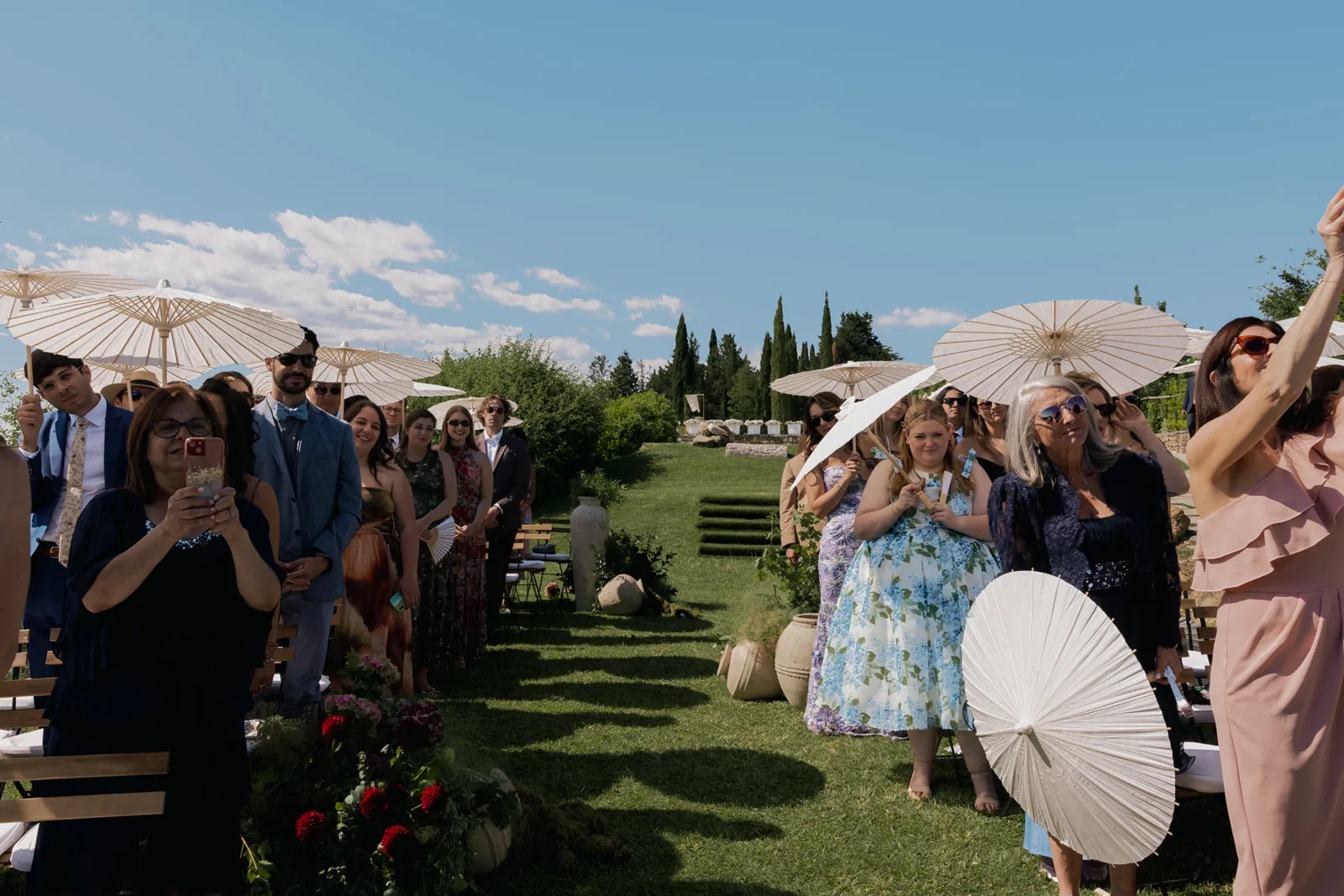
Local rules matter too. On the Amalfi Coast, in Sorrento and on Lake Como, music must stop by midnight, and in some places earlier. Very few venues can continue until 2 am, always indoors and always for a supplement. If dancing late into the night matters to you, this will narrow your list of venues before anything else does.
Does a smaller wedding cost less?
Not always in proportion. A photographer will usually charge a similar fee for 60 guests or 120, because you are paying for their time and judgement, not for headcount. Caterers work the same way: staff, transport and equipment are largely fixed, so the cost per guest rises as the group gets smaller. A wedding for 60 guests is rarely half the cost of one for 120.
An approximate guest count is enough to begin. You can refine it later, but a realistic starting number lets your planner shortlist the right venues and build a first budget you can trust.
Does your wedding date change the price?
Yes, and flexibility is one of the most valuable things you can bring to the first conversation. Demand in Italy varies by region and season. In the most requested weeks, venue rates are higher, the best suppliers are booked first and accommodation is harder to secure for a large group.
Before you start, ask yourselves:
- Which year are you considering?
- Do you have a specific date, or a season?
- Would you consider a Friday or a weekday celebration?
- Would you move by a week if it gave you a better venue?
If your date is fixed, that is fine. It simply becomes the first constraint we plan around.
Should your guests stay at the venue?
For guests traveling from abroad, where they sleep shapes the whole experience. It is also a significant cost, which is why we budget it separately from the range above.
Some couples want everyone together on one private estate for the full weekend. Others prefer a venue with good hotels nearby, where guests book their own rooms. Both work. They lead to very different properties and very different costs. An estate that sleeps 40 is perfect for one couple and unsuitable for another expecting 100 guests to stay together.
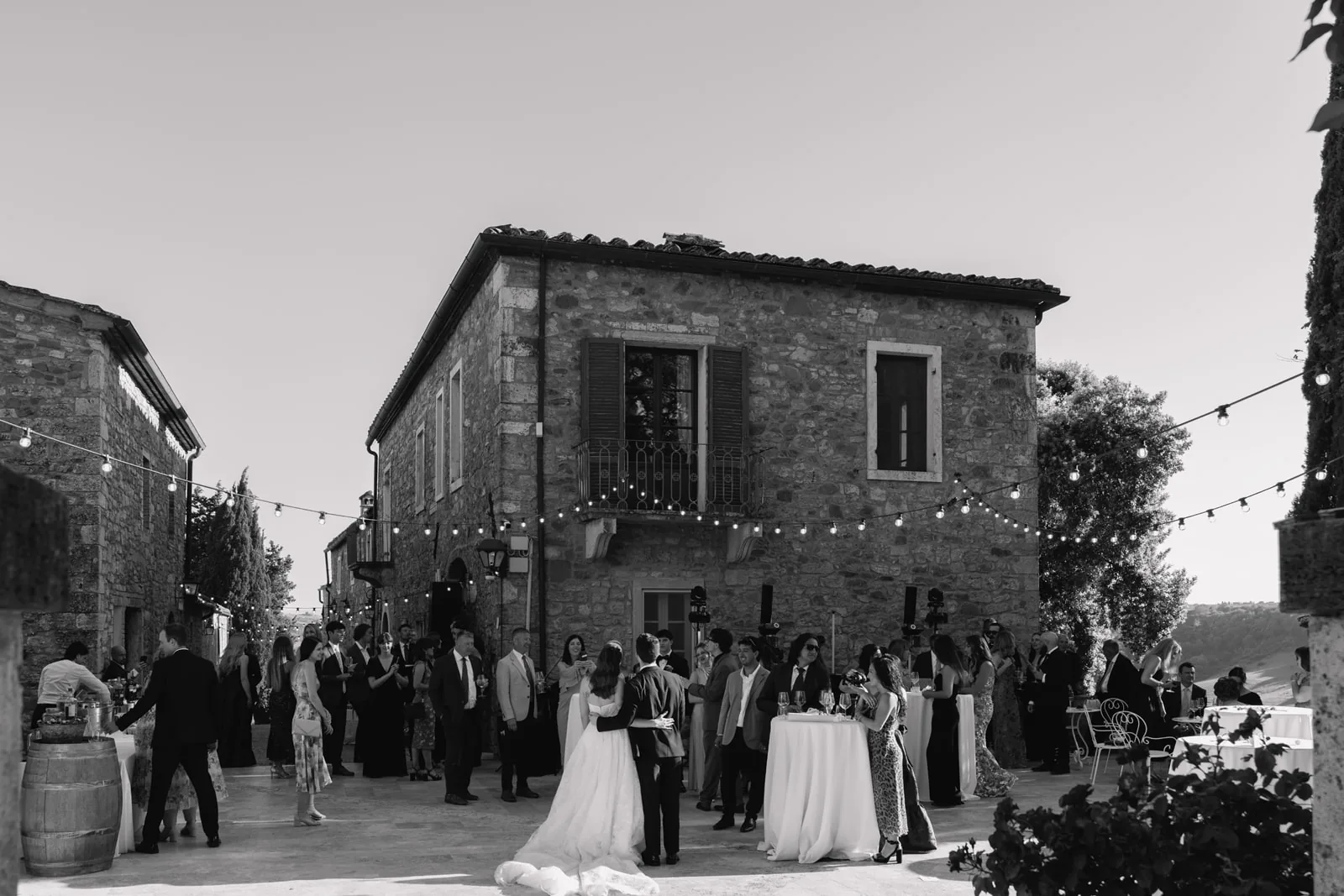
Decide early how many guests need a room, whether you want everyone under one roof, and whether you will cover the accommodation, contribute to it or let guests book on their own. If staying together matters, it belongs in your venue criteria from day one, not after the venue is signed.
What do a welcome dinner and farewell brunch add to the budget?
The events around the wedding day are where a trip to Italy becomes a shared experience with your family and friends. They are also where budgets most often drift, because “informal” sounds inexpensive.
One of our couples asked for a simple welcome pizza party. By the time the evening took shape, it included rented linens and tableware, floral designs with flowers and fruit, an Italian market corner with personalized welcome bags full of local products, a folk band, a sound system with microphones for the speeches and a gelato cart. It was one of the best nights of the weekend, and it was a real event with a real budget.
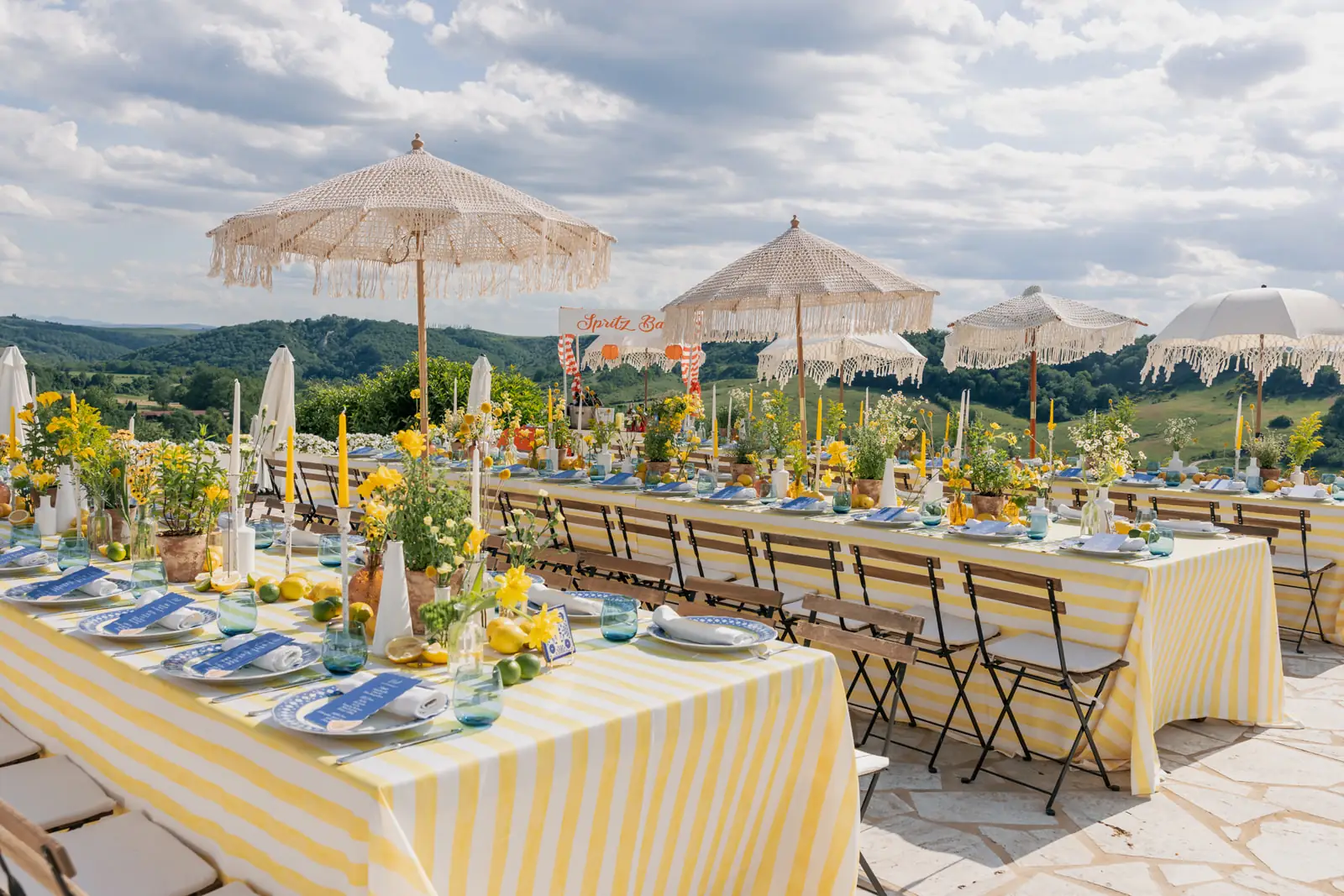
When you compare proposals, ask what each one includes. Some caterers quote for furniture, tableware, lighting and staff; others quote for food and service only. Give every event its own realistic budget from the start, and decide how much of your investment goes to the wedding day and how much to the time around it.
Does the type of ceremony matter?
It affects where you can marry, the timeline of the day and the coordination it requires. A symbolic ceremony can take place at your reception venue. A civil ceremony has legal requirements and set locations. A religious ceremony involves the church and its own rules.
Local rules matter more than most couples expect. On the Sorrento peninsula, for example, Catholic church weddings are reserved for local residents, so couples who want a church ceremony in the area usually marry on the Amalfi Coast instead.
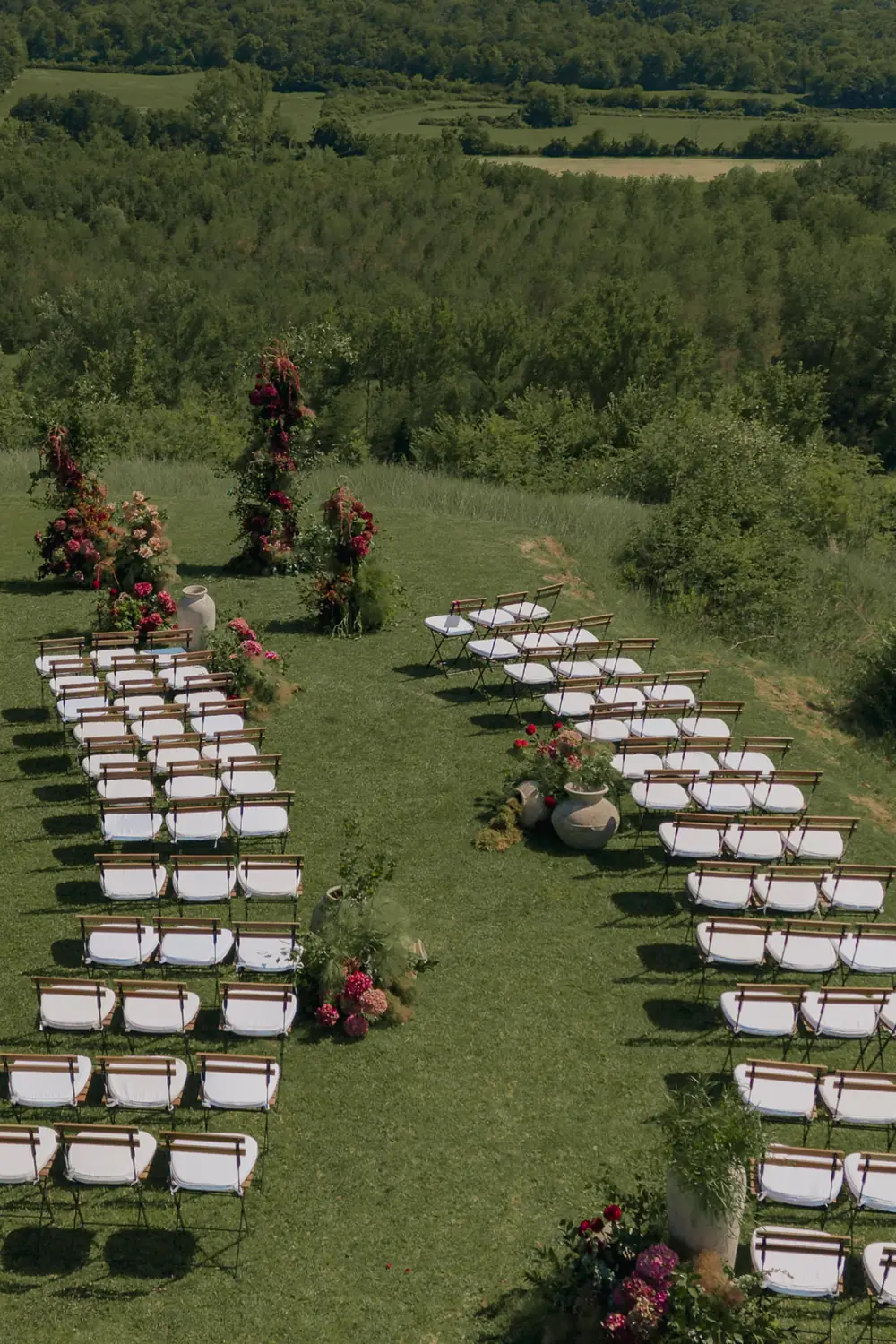
You don’t need a complete design concept at this stage. A few words about the atmosphere you want, and whether you prefer everything in one place or a ceremony elsewhere, are enough to begin.
How much does a wedding planner in Italy cost?
A planner’s fee does not pay for finding beautiful venues. It pays for three things that are hard to do from abroad: knowing which venues and suppliers actually deliver for a group of 100, translating Italian contracts, habits and timelines into decisions you can make with confidence, and running a weekend of several events so that neither you nor your guests have to manage it.
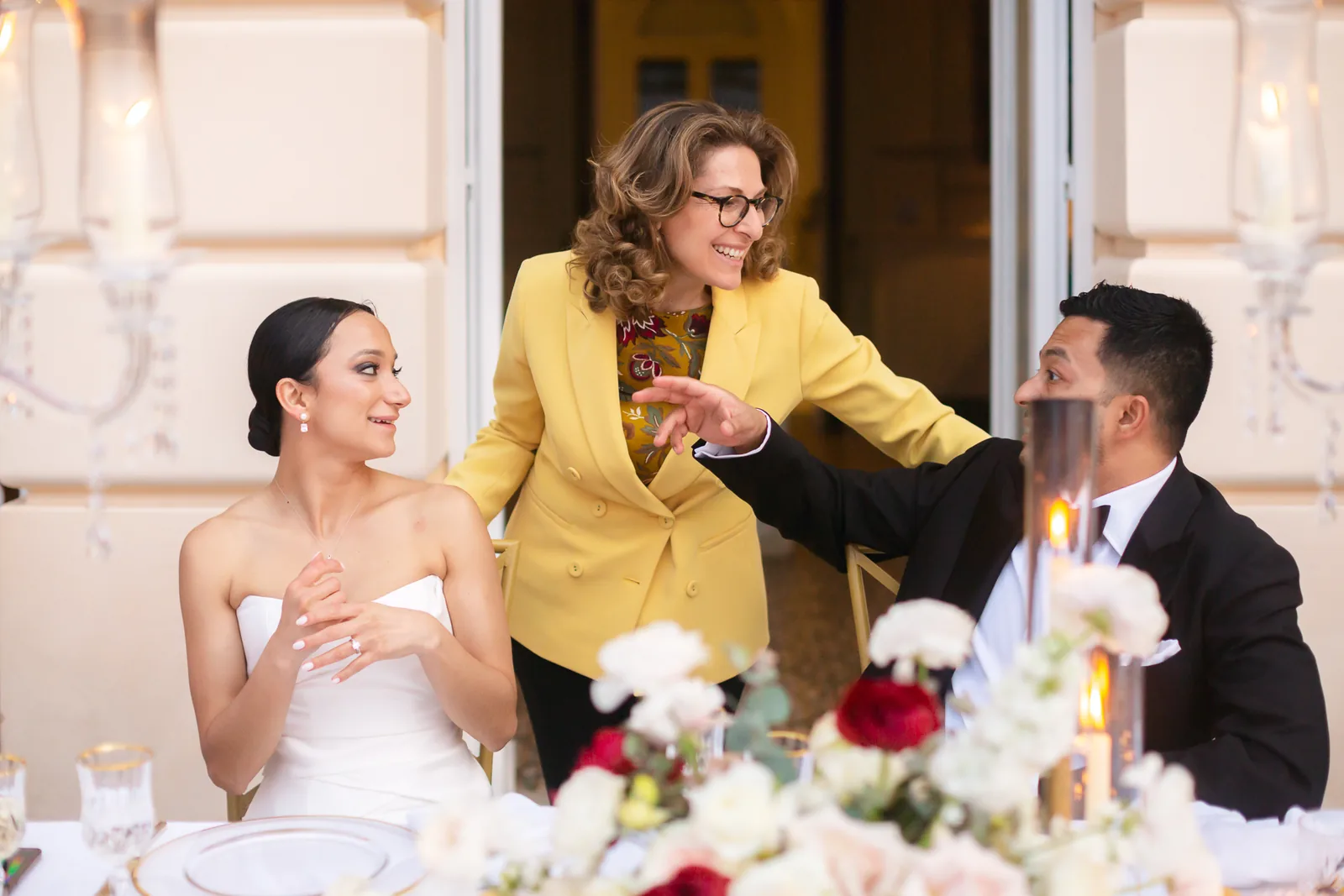
At Happy Brides, our fee is a flat fee, built on the scope of your wedding:
- The number of events. A welcome dinner, a wedding day and a farewell brunch each need their own planning, suppliers and timeline.
- The logistics. Several venues, transfers, accommodation and activities across several days all add coordination.
- The level of support. Some couples need us from the very first decision. Others have already booked a venue and need us for everything after.
When you compare planners, compare what each fee covers, not only the figure. Here is what our planning includes.
What to include in your first inquiry
You don’t need a finished plan to contact a planner. Building that plan is our job. A few details in your first message make the first call far more useful:
- Date: the year, the season or a specific date, and how flexible you are.
- Guests: an approximate number.
- Days: a single day, or a weekend with welcome and farewell events.
- Region: if you already have one in mind.
- Budget: an honest range, and what it should cover.
- Accommodation: how many guests need rooms, and who is paying.
- Ceremony: symbolic, civil or religious.
- Priorities: the two or three things that matter most to you.
- What is already booked: venue or suppliers, if any.
You get to experience Italy. We handle Italy.
If you are planning a wedding weekend for 70 to 150 guests, send us your date, guest count, number of days and an honest budget range. I read and answer every inquiry myself.

About the author. Simona is the founder of Happy Brides. More than twenty years planning weddings in Italy, first in luxury hotels and for the last ten years with Happy Brides. More than 300 weddings planned for couples from around the world.