



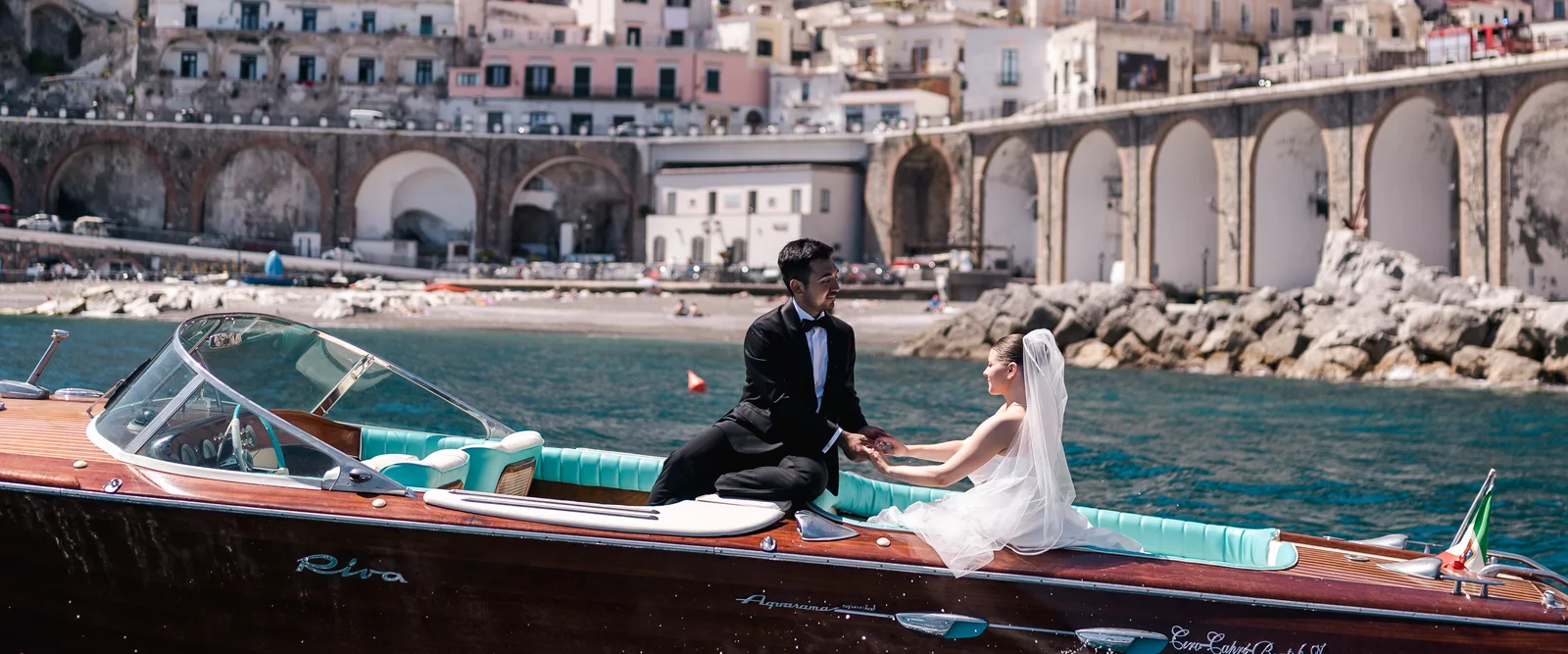
How to Plan a Wedding in Italy from Abroad: A Realistic Timeline
Updated November 2026. By Simona, founder of Happy Brides.
Most couples who contact us have already done a lot of research. They have saved venues, read about seasons and compared regions. What they don’t have yet is an order of operations: what needs to be decided first, what can wait, and how to make all of it work from another time zone.
After more than twenty years planning weddings in Italy and more than 300 weddings, I can tell you that the timeline matters more than any single choice. Couples who decide the right things early have a calmer year. Couples who start with the details often end up undoing them.
This guide follows the order we use with our own couples, from the first call to the morning after the wedding.
How far ahead should you start planning?
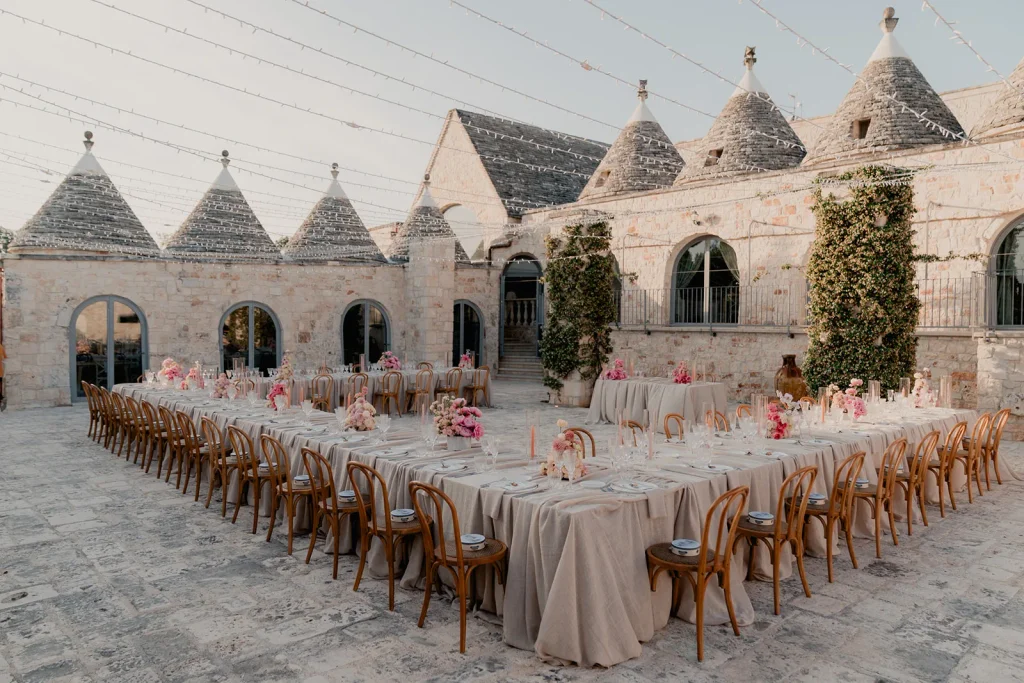
The venue is always the first thing to secure, and how early you need to start depends on the region and the season.
- The most requested venues in Tuscany and on Lake Como: up to two years ahead. In Tuscany especially, many estates sell the wedding together with a stay of at least three nights, so the most popular months, such as June and September, are often booked two years in advance.
- Other regions, or a flexible date: 12 to 18 months ahead is usually enough.
- A shoulder season date, midweek: if you would marry in April or October, on a weekday, planning in 8 or 9 months is possible.
If you have a fixed date in a popular month, start as early as you can.
Start with your budget and your priorities
The first step comes before any venue: a clear idea of your budget and of what matters most to you. It helps to have an approximate price range for each service from the start. What is not possible is to request quotes for every service at the same time and plan the whole event in one go. Suppliers cannot hold dates while you compare dozens of proposals, and the best ones are booked first.
Planning works in sequence. You book the most important suppliers first, starting with the ones that matter most to you. The venue always comes first, followed by catering and bar service, and then the venues for your welcome dinner or farewell brunch. Next usually come photography and video, hair and makeup, and entertainment.
The decisions that shape everything
These are the choices that decide your budget, your venue and your guests’ experience. Everything else follows from them.
- Region and season. The Amalfi Coast, Tuscany, Puglia and Lake Como offer very different weekends. Season changes the light, the heat, the crowds and the prices.
- Guest count. An approximate number is enough, but it needs to be realistic. It decides which venues can host you.
- Number of days. A single wedding day, or a weekend with a welcome dinner and a farewell brunch.
- Budget. An honest range, and what it should cover. Our guide to what a wedding in Italy really costs can help you set it.
- Accommodation. Whether you want everyone under one roof, and who is paying for the rooms.
- Ceremony. Symbolic, civil or religious. It affects where you can marry and the paperwork involved.
This is also why we always suggest choosing your planner before the venue, not after. A good planner will help you make these decisions, not just carry them out, and can guide the venue search from the start. Once your criteria are clear, we shortlist the venues that fit them best.
It helps to know from the start that the perfect venue, the one that ticks every box, rarely exists. Every property asks for a compromise somewhere: the view or the number of rooms, the setting or the access, the date or the price. Couples who search on their own often spend months comparing hundreds of options and end up feeling overwhelmed rather than closer to a decision. It is the word we hear most often from couples before they start working with us. A short list chosen with experienced judgement, with every trade-off explained clearly, takes that feeling away and turns the search into a decision.
The venue: the first booking
With your criteria agreed, we present a short list of venues. You don’t need to fly to Italy to choose one: we can arrange a virtual tour of each property and visit on your behalf, so you can decide with confidence from home.
Guest accommodation works differently in Italy than in many other countries. Most hotels only open availability and rates around September of the year before, so if you marry in May, you usually cannot secure rooms a full year ahead. Room blocks also come with conditions that are worth understanding before you promise anything to your guests. What we usually recommend is to suggest two or three hotels close to the venue and let guests book freely, with our concierge service available to help them with bookings and logistics.
The site visit
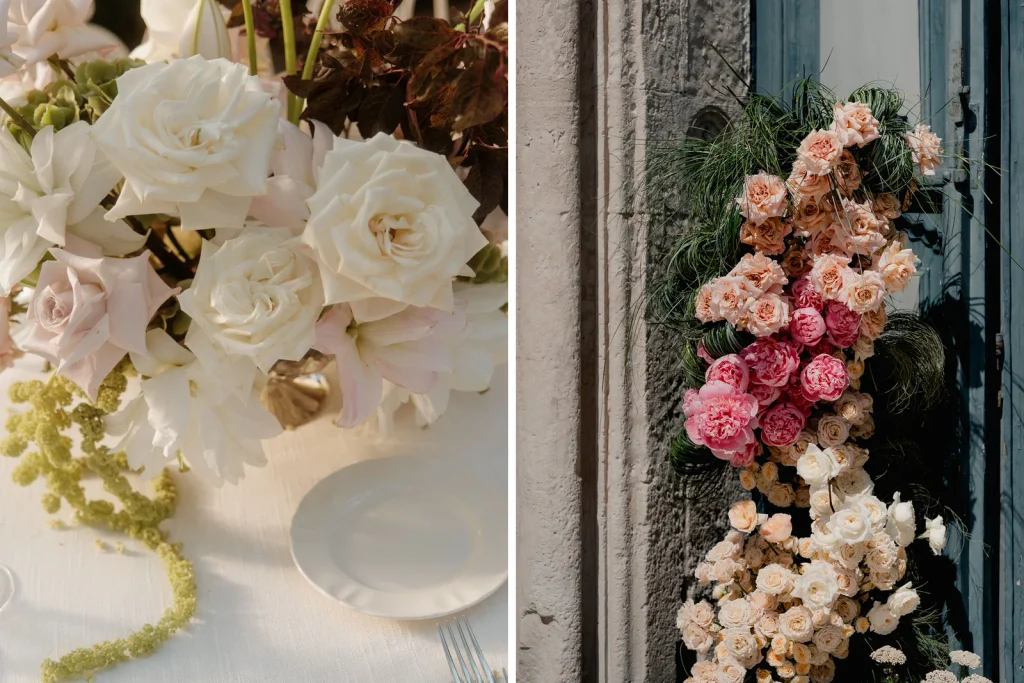
Many couples come to Italy once before the wedding, although it is not essential. We suggest planning the visit after the venue is booked, so that it does much more than show you a property: you can taste the menu, have your hair and makeup trials, meet the florist and see the places for your welcome dinner or farewell brunch.
The best time for a site visit is October, March or April. In summer, many suppliers are working every single day and have very little time to meet you.
About 12 months before: suppliers, ceremony and save the dates
After the venue, the other suppliers are usually booked from around twelve months before the wedding, in order of importance to you: first catering and bar service, then the venues for the events around the wedding day, then typically photographer and videographer, hair and makeup, and music and entertainment, followed by florist, designer and the remaining services.
Timing matters here. From May to September, Italian wedding suppliers are working almost every single day, and many of them answer new enquiries more slowly. We recommend booking your suppliers during the winter months, from October to March, when they have time to give your wedding proper attention.
If you are planning a civil ceremony or a religious ceremony, we confirm the location and start checking the requirements now. Some local rules surprise couples: on the Sorrento peninsula, for example, church weddings are reserved for residents, so couples who want a church ceremony in the area usually marry on the Amalfi Coast instead. A symbolic ceremony has no legal requirements and can take place at your reception venue.
This is also the time for save the dates and a first version of your wedding website. Keep them to the essentials: the wedding dates, the wedding venue, and the dates and the town or area of the events around it. That is all your guests need to book time off and flights. The details can follow later.
8 to 4 months before: the weekend takes shape
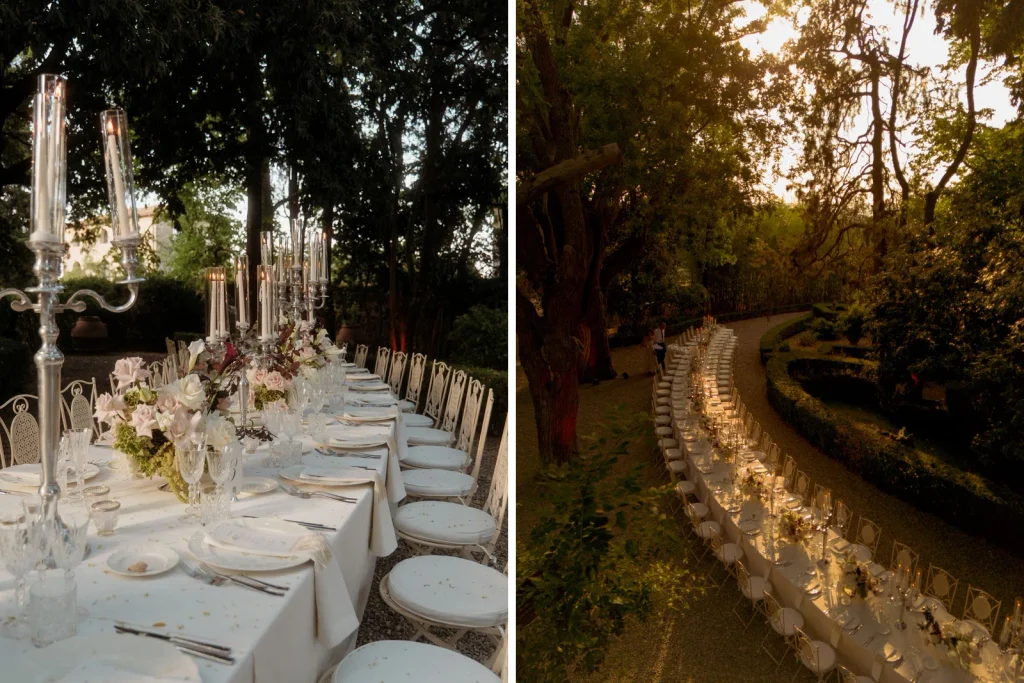
Now the plan moves from venues to experience.
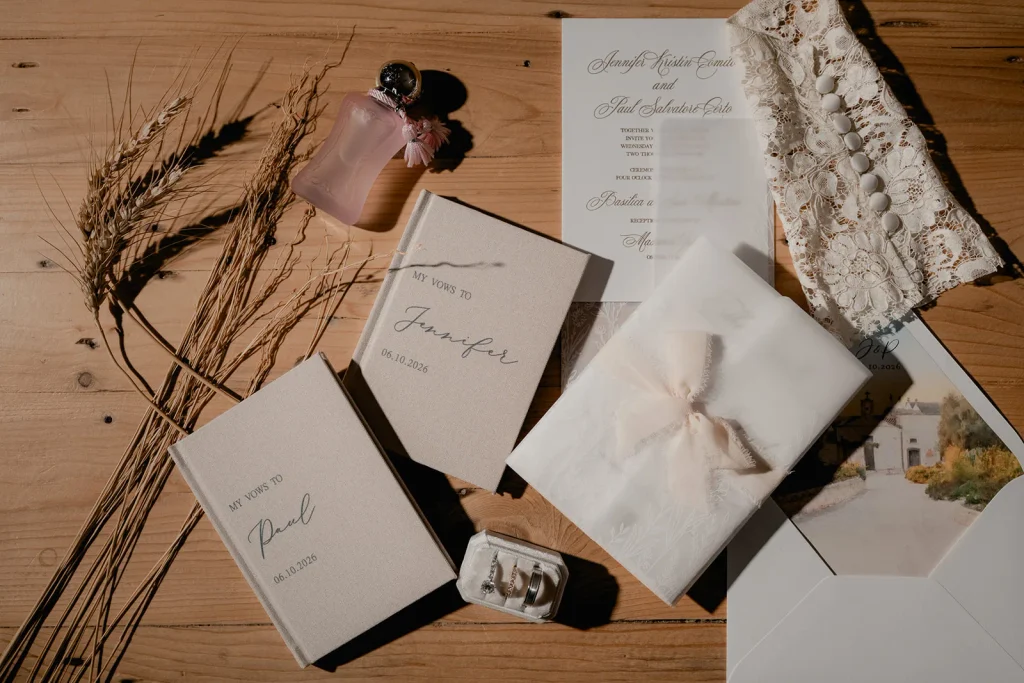
- Design. Flowers, tables, lighting and stationery, built around the venue rather than against it.
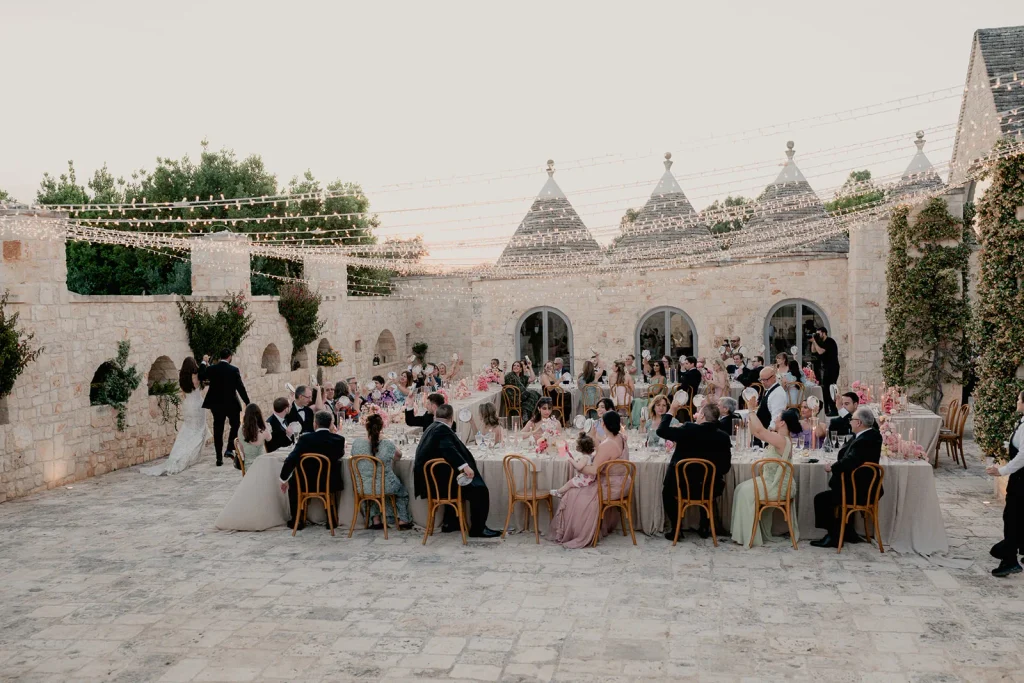
- Events around the wedding. Welcome dinner, farewell brunch and any activities for your guests, each with its own plan and budget. More and more often these events have their own dedicated suppliers, from entertainment to decor, table settings and transport, so they should never be left until last.
- Guest information. Travel advice, transfers, a wedding website and a clear schedule for the weekend.
- Invitations. Usually sent four to five months before the wedding, asking guests to reply at least three months ahead. Guests often answer late, and the final guest count is essential for transfers and seating.
Local rules that shape the day are part of the conversation from the start. On the Amalfi Coast, in Sorrento and on Lake Como, for example, music must stop by midnight, and in some places earlier. We discuss rules like these well in advance, so that every service is planned around them and nothing comes as a surprise.
4 to 1 months before: documents and details
The legal documents for a civil or religious ceremony depend on your nationality and country of residence, and some of them are only valid for a few months. We tell you exactly what you need and when to request it, so nothing expires before the wedding.
With the final guest count, we finalize the seating, the timeline of each event, transport between venues, the Plan B for bad weather and the last payments to suppliers. Our aim is to have every detail ready at least two months before the wedding.
The final week in Italy
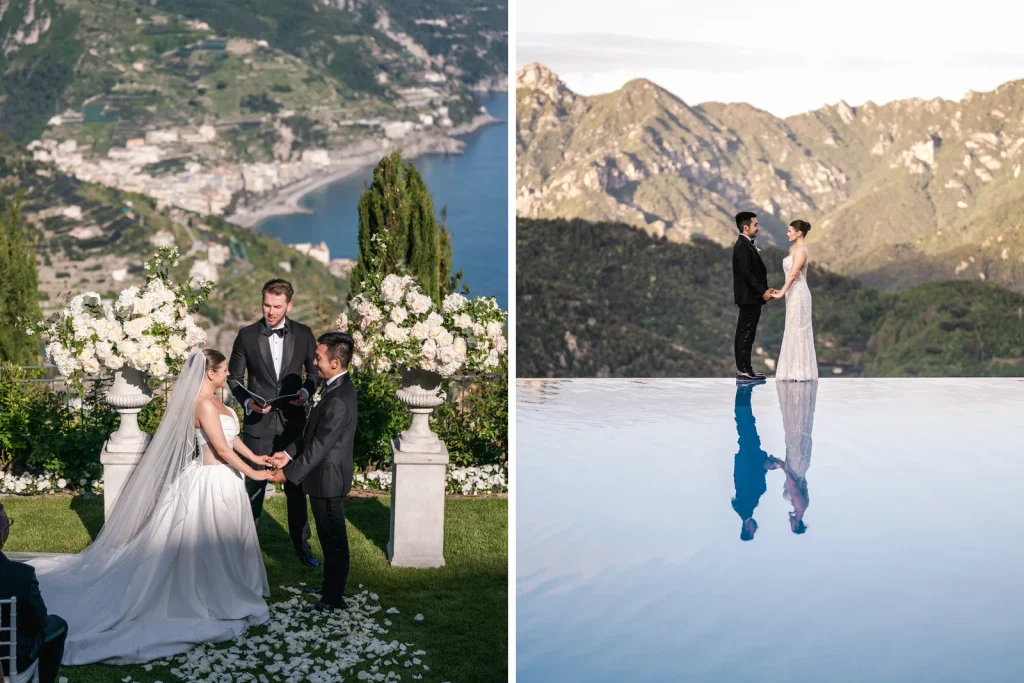
For a civil ceremony, we suggest arriving in Italy at least seven days before the wedding. The legal formalities take place at the town hall, and many town halls are not open every day, often only in the morning, so a week gives you a safe margin. It also gives you time to recover from the journey, see the venue set up and welcome your guests without rushing.
By this point, your role is simple: be there for your family and friends. Every supplier, transfer and timing is already confirmed, and we are the ones who handle anything that changes.
How do you plan from another time zone?
Most of the work happens on video calls and by email, at times that suit your day. At Happy Brides we work with our own established system: a planning platform where the whole checklist is managed in one place, with deadlines set from the start, so you reach the wedding day relaxed rather than rushed. What makes it work, though, is not the technology alone. It is having one point of contact who makes decisions with you, coordinates every supplier in Italian and tells you clearly what needs your attention and what does not.
Where to start
You don’t need a finished plan to contact us. A date or season, an approximate guest count, the number of days you imagine and an honest budget range are enough for a useful first conversation. To see how those choices translate into a budget, read our guide to what a wedding in Italy really costs.
You get to experience Italy. We handle Italy.
If you are planning a wedding weekend in Italy, tell us about your celebration. I read and answer every enquiry myself.
And if there is a detail you are unsure about, or a question this guide has not answered, send us a quick message. We will be happy to reply, with no commitment. Our aim is to help couples who want to marry in Italy, and your question today may be the answer someone else is waiting for too.

About the author. Simona is the founder of Happy Brides. More than twenty years planning weddings in Italy, first in luxury hotels and for the last ten years with Happy Brides. More than 300 weddings planned for couples from around the world.